

The micro-adventure movement is reshaping how people experience the outdoors—proving you don’t need weeks off work or a plane ticket across the world to find real adventure. If you’re here, you’re likely looking for practical ways to break out of routine, reconnect with nature, and add meaningful exploration to your everyday life without overcomplicating it.
This article delivers exactly that. We’ll break down what the movement truly means, why it’s gaining momentum, and how you can start your own micro-adventures with minimal gear, limited time, and close-to-home destinations. You’ll also discover smart planning strategies, essential safety considerations, and realistic ideas that fit busy schedules.
Our insights are grounded in hands-on outdoor experience, field-tested gear comparisons, and survival best practices drawn from seasoned adventurers and wilderness experts. The goal is simple: give you clear, trustworthy guidance so you can step outside with confidence—starting sooner than you think.
Beyond the Summit: Finding Adventure in Your Own Backyard
You don’t need a plane ticket to feel alive. In fact, some of the best adventures start ten minutes from home. Instead of chasing epic expeditions, try a sunrise trail run, a map-and-compass practice hike, or a bikepacking overnight in a nearby state forest. These small challenges build skills—navigation, pacing, gear testing—without draining your wallet. That’s the heart of the micro-adventure movement: consistent, local, meaningful exploration. To get started, set a tight timeframe, pack light, and choose one skill to practice. Before long, your backyard becomes your personal proving ground.
The Micro-Adventure Mindset: How to See Your Local Area with New Eyes
I used to think adventure required distance. If I wasn’t driving three hours or boarding a plane, it “didn’t count.” That assumption kept me blind to what was five minutes from my door. The shift happened when I embraced a heuristic approach—learning through direct discovery instead of overplanning. (Think less travel brochure, more curious detective.)
At first, I made mistakes. I ignored satellite maps and wandered aimlessly, missing a hidden creek practically behind my neighborhood. Now, I scan Google Maps in Satellite View and cross-reference with AllTrails to spot green corridors, trailheads, and odd landmarks. Mapping your territory turns the familiar into unexplored ground.
I also botched my first “5-to-9” Adventure—left work at 5 PM, forgot a headlamp, and stumbled back to my car before midnight. Lesson learned: small preparation makes bold ideas sustainable. The goal isn’t mileage; it’s engagement.
The micro-adventure movement thrives on this principle: challenge by choice. Navigate a local trail using only a compass. Identify five native plant species. (Yes, you’ll misidentify one as poison ivy—I did.)
Start small. Stay curious. You don’t need Everest. Sometimes you just need new eyes.
Gearing Up for Simplicity: The Essential Lightweight Kit
Ever notice how the hardest part of a quick escape is… packing? That’s where the “go-bag” concept comes in—a small, pre-packed kit with essentials, always ready for a spontaneous outing. No overthinking. Just grab and go. If the micro-adventure movement has taught us anything, it’s that adventure favors the prepared.
So what actually goes inside? First, prioritize multi-purpose gear. A traditional tent offers comfort and full protection. But for a half-day or overnight dash, a lightweight tarp and bivy (a minimalist waterproof sleeping cover) can cut weight in half. Do you really need a full cookset, or will a single nesting metal cup and spork handle boiling water for coffee and dehydrated meals? (Spoiler: it usually will.)
Next, scale down the Ten Essentials—the core safety items for outdoor travel. Keep a compact first-aid kit, a reliable headlamp, navigation, sun protection, insulation, fire starter, repair kit, nutrition, water, and emergency shelter—but shrink each to match trip length. A palm-sized water filter beats hauling liters.
Finally, footwear. Trail runners are lighter and dry faster than hiking boots. On local terrain, why carry extra weight if you don’t need it? Your knees might thank you.
Five Accessible Adventures to Try This Weekend
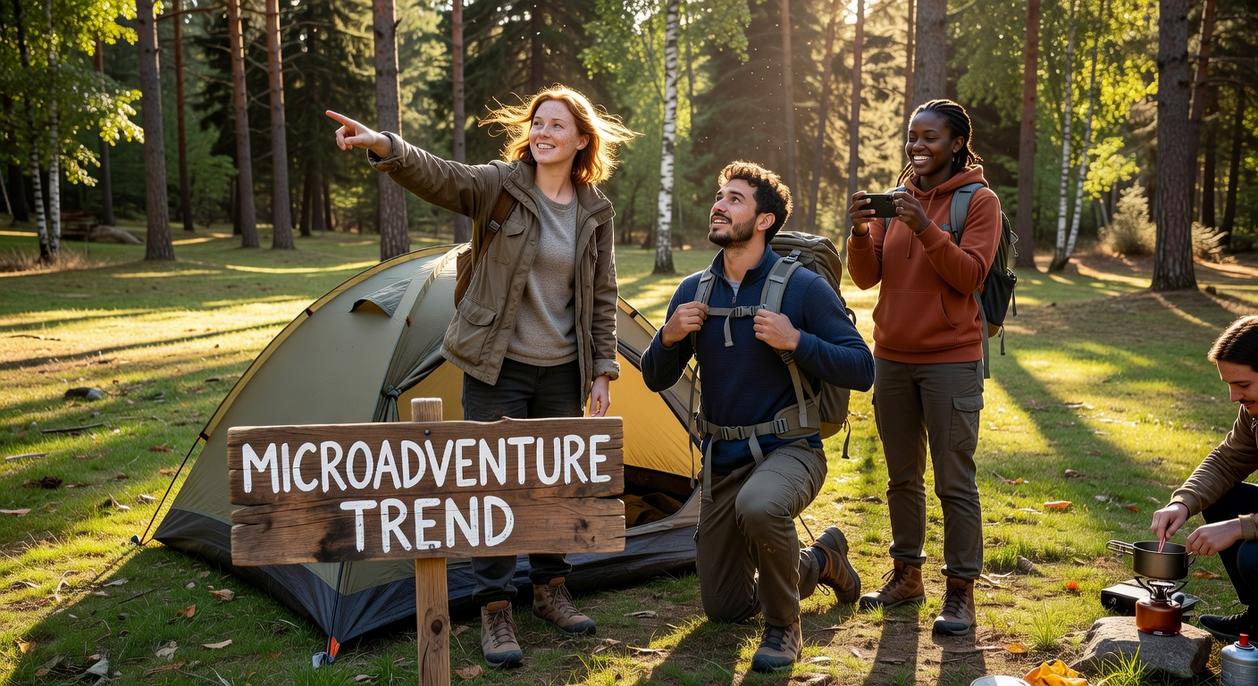
Last Saturday, I realized I’d spent more time scrolling through adventure reels than actually having one. So I tried something different: small, local, doable. That’s the spirit behind the micro-adventure movement—short, close-to-home experiences that deliver real exploration without elaborate planning.
1. Geocaching & Digital Orienteering
Geocaching is essentially a GPS-powered treasure hunt (think Pokémon Go, but with real containers). You use coordinates to locate hidden “caches” in parks or neighborhoods. The first time I tried it, I ended up discovering a mural I’d walked past for years without noticing. It adds purpose to a simple walk—and purpose changes everything.
2. Local Waterway Paddle
Paddling a nearby river reframes familiar scenery. From water level, overhanging trees feel cinematic (very Lord of the Rings, minus the orcs). Kayaking also builds core strength and coordination. According to the American Council on Exercise, paddlesports provide low-impact cardiovascular benefits. Pro tip: check wind direction before launching—paddling back against gusts is humbling.
3. The Urban to Trail Hike
Start at your front door. No driving. Transition from sidewalks to dirt paths. This “gradient adventure” (a route that gradually shifts environments) makes your city feel expansive. The first time I did it, the change from traffic noise to birdsong felt almost theatrical.
4. The ‘Stealth’ Campout
Book a designated campsite for one night. Treat it as a gear test. I once learned at 10 p.m. that my “waterproof” tent was optimistic at best. Better to find that out locally than 20 miles deep.
5. Foraging for Beginners
Start simple: dandelion greens or blackberries. Foraging means gathering wild edible plants—but misidentification can be dangerous. The CDC warns that toxic plant ingestion sends thousands to emergency rooms annually. Use a reputable field guide and cross-check features carefully.
Before heading out, review these sustainable tourism updates every outdoor enthusiast should know to protect the places you explore.
Essential Skills for Spontaneous Outings
Spur-of-the-moment trips are the heart of the micro-adventure movement—quick escapes that don’t require months of planning (or a reality TV crew).
Knot Tying Basics
- Bowline: Creates a fixed loop—perfect for securing a tarp corner.
- Taut-line hitch: Adjustable tension knot for tent guylines.
- Clove hitch: Fast way to anchor a rope to a tree.
Back in 2020, after one stormy overnight, I learned knots save time and sanity.
Fire Starting Hack
Mix cotton balls with petroleum jelly; they burn 4–5 minutes and stay waterproof.
Basic Navigation Check
Use an analog watch: point the hour hand at the sun; halfway to 12 marks south.
Your Next Adventure Awaits, Just Outside Your Door
You don’t need airfare to feel alive. The idea that adventure requires passports and months of planning is overrated. Exploration starts when you decide neighborhood trail is enough.
Feeling stuck? That’s not a location problem. It’s a perspective problem. Redefine adventure as a weekly habit, not an annual escape. A sunrise hike, a backyard bivvy, a cycling route—these small bets build skills, test gear, and keep your edge sharp (and your excuses weak).
The micro-adventure movement proves stories can start
• Pick one activity.
• Check the weather.
• Go this week.
Keep the Wild Within Reach
You set out to discover how to make adventure fit into real life — not someday, but now. By exploring practical outdoor skills, smart gear comparisons, and simple trail ideas, you’ve seen how accessible the wild can truly be.
The truth is, most people feel stuck between busy schedules and the desire for something more. That pull for fresh air, challenge, and clarity doesn’t go away. Ignoring it only makes daily life feel heavier and more routine.
The micro-adventure movement proves you don’t need months off or extreme expeditions to reconnect. Small, intentional escapes and the right preparation can completely change how you experience your weekends — and your mindset.
Now it’s your move. Pick one trail. Test one new skill. Upgrade one essential piece of gear. Then keep building momentum.
If you’re tired of feeling disconnected from the outdoors, start taking action today. Explore our trusted trail guides, compare top-rated adventure gear, and learn wilderness hacks that are built for real-world results. Thousands of outdoor enthusiasts rely on our insights to adventure smarter — and you can too.
Step outside. Start small. And turn your next free afternoon into something unforgettable.