When you’re heading into the backcountry, access to safe drinking water isn’t a luxury—it’s a necessity. If you’re searching for clear, reliable guidance on wilderness water purification methods, you likely want practical solutions that work in real-world conditions, not vague survival theory. This article is designed to give you exactly that.
We break down the most effective purification techniques used by experienced outdoor enthusiasts, from filtration systems and chemical treatments to boiling and advanced UV solutions. You’ll learn when each method makes sense, what gear you actually need, and how to avoid common mistakes that can compromise your safety.
Our recommendations are grounded in field-tested outdoor practices, current safety guidelines, and insights drawn from seasoned trail users who rely on these techniques in unpredictable environments. Whether you’re planning a weekend hike or an extended wilderness expedition, this guide will help you choose the right approach with confidence.
Why That Crystal-Clear Stream Isn’t Safe to Drink
That sparkling alpine stream may look PURE, but invisible pathogens like Giardia (a microscopic parasite that causes severe diarrhea) can turn a dream trip into a survival story. According to the CDC, untreated surface water is a leading cause of backcountry illness. The good news? Mastering wilderness water purification methods keeps you energized, focused, and adventure-ready.
- Boiling: Kills bacteria, viruses, and protozoa (reliable, but fuel-heavy).
- Filtering: Removes debris and many pathogens (fast and convenient).
- Chemical treatments: Lightweight and affordable (wait time required).
- UV light: Neutralizes microbes quickly (needs batteries).
Choose wisely, drink confidently, and PROTECT your trip.
The Invisible Threats: What’s Lurking in the Water?
Pathogen Primer. Water can look pristine and still hide trouble. Three main microorganisms matter: protozoa (like Giardia and Cryptosporidium), bacteria (like E. coli and Salmonella), and viruses (like Hepatitis A and Norovirus). Protozoa are hardy parasites that survive cold streams. Bacteria multiply quickly in warm runoff. Viruses are microscopic hitchhikers spread by fecal contamination.
Source Matters (But Not as Much as You Think). Even high-altitude, fast-moving creeks can be tainted by wildlife, grazing herds, or upstream hikers.
A vs B scenario: crystal-clear mountain flow vs muddy pond. Most people choose A. But CLEAR IS NOT CLEAN. Visual clarity tells you nothing about microbes.
Consider your options:
- Boil the water (heat kills pathogens).
- Use filters designed for wilderness water purification methods.
- Chemical tablets for backup.
Skipping treatment because it looks safe is GAMBLING WITH YOUR HEALTH. Choose caution over confidence every single time.
The Gold Standard: Purifying Water by Boiling
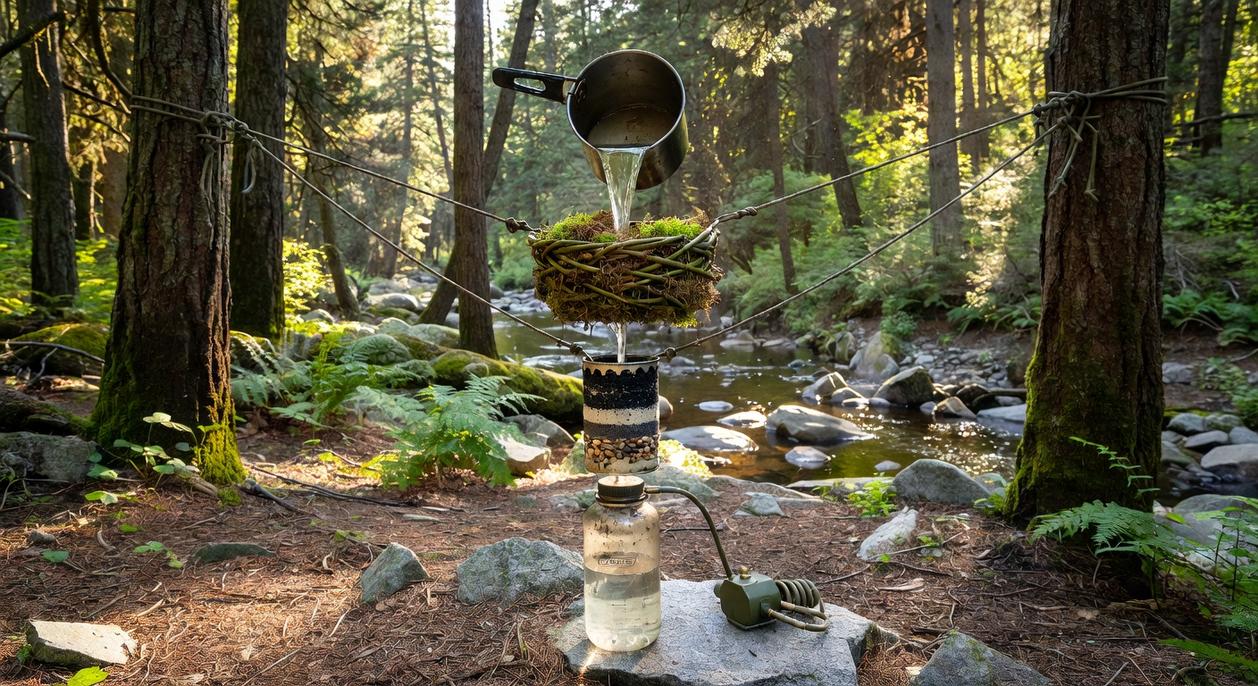
Back in 2019, after a late-spring trek where filters failed mid-trip, I relearned why boiling remains the gold standard of wilderness water purification methods. The process is simple but precise: bring water to a full, rolling boil for at least one minute. At elevations above 6,500 feet (2,000 meters), where water boils at lower temperatures, extend that time to three minutes. Those extra 120 seconds can make the difference between safe hydration and a miserable night.
Pros: Boiling kills all major pathogens—bacteria, protozoa, and viruses—by denaturing their proteins (think of heat unraveling them beyond repair). The CDC confirms boiling is highly effective against disease-causing organisms.
Cons: It takes time, fuel, and patience. You’ll also need to let the water cool before drinking. And while boiling neutralizes microbes, it won’t remove sediment or floating grit (no one enjoys crunchy water).
Modern Convenience: Water Filters and Purifiers
When you’re miles from the trailhead, water safety isn’t optional—it’s survival math. The key distinction is simple but critical: filters remove bacteria and protozoa, while purifiers eliminate bacteria, protozoa, and viruses. Bacteria (like E. coli) and protozoa (like Giardia) are larger microbes. Viruses are much smaller, which is why many standard filters can’t catch them.
Some hikers argue viruses are rare in North American backcountry, so a basic filter is “good enough.” Often, that’s true. But in high-traffic areas, downstream from livestock, or during international travel, viral contamination becomes a real risk (CDC guidance supports purifier use in high-risk regions). My recommendation: match your tool to your terrain.
Choosing the Right System
Squeeze Filters (like the Sawyer Squeeze) are lightweight and fast. Attach, squeeze, drink. Ideal for solo hikers who prioritize speed.
Gravity Filters shine for groups. Fill a reservoir, hang it, and let physics handle the work (it’s the closest thing to campsite luxury).
Pump Filters are durable and field-maintainable. They handle silty or murky sources better than most.
Pros: Immediate water, improved taste, sediment removal.
Cons: Clogging, maintenance needs, and vulnerability to freezing (a frozen filter can crack internally—pro tip: sleep with it in your bag on cold nights).
If you’re building core wilderness water purification methods into your kit, I recommend carrying a lightweight squeeze filter plus chemical backup tablets for emergencies. Redundancy beats regret.
And remember: safe water pairs with other smart systems—like mastering fire starting techniques that work in wet conditions. In the wild, convenience isn’t luxury. It’s resilience.
The Lightweight Backup: Chemical Treatments
Need a no-fuss backup when your filter fails or your pack is already bursting at the seams? Chemical treatments might be your simplest solution. These methods use substances like chlorine dioxide or iodine to neutralize pathogens (harmful microorganisms like bacteria, viruses, and protozoa). In other words, they make unsafe water drinkable without pumps or batteries.
So how do they work in practice? First, dosage matters. Add the correct number of tablets or drops—no guessing. Then wait. Typically, that’s 30 minutes to 4 hours, depending on water temperature (colder water slows the reaction). Ever tried rushing the process? It’s not worth the risk.
Chlorine dioxide—available in tablets or drops—is highly effective against all major pathogens, including tough Cryptosporidium. It’s widely considered the gold standard among chemical wilderness water purification methods and leaves minimal aftertaste. Iodine, on the other hand, works well against most threats but struggles with Cryptosporidium and can leave water tasting like a swimming pool. It’s also not recommended for pregnant individuals or those with thyroid conditions.
Of course, critics point out the long wait times and flavor changes. Fair. Yet when weight and simplicity matter most, these tiny tablets earn their place in your kit.
Ultraviolet (UV) purifiers use concentrated light to disrupt microbial DNA (think sci-fi laser, but practical). As a result, bacteria and viruses can’t reproduce. They’re fast—about 60–90 seconds per liter—and preserve taste. However, bring batteries, pre-filter cloudy water, and handle carefully; compared to wilderness water purification methods, they’re efficient yet fragile.
By now, you have a complete toolkit to ensure every sip of water you take in the wilderness is safe. However, most guides stop at listing wilderness water purification methods and call it a day. We go further: build redundancy into your plan. Smart adventurers never rely on a single system; instead, pair a primary filter with chemical tablets as backup. Granted, some hikers argue that extra gear adds weight. Yet, a few ounces beat days of dehydration. Before every trip, assess climate, water sources, and group size, then choose systems that match real conditions. Pro tip: test everything beforehand.
Your Next Step Toward Safer, Smarter Outdoor Adventures
You set out to find reliable, practical guidance for staying safe and self-sufficient outdoors—and now you have it. From essential gear comparisons to trail-tested survival strategies, you’re better equipped to handle the unexpected with confidence.
But here’s the truth: when you’re miles from civilization, uncertainty is your biggest risk. Clean water, dependable tools, and proven techniques aren’t luxuries—they’re necessities. Mastering wilderness water purification methods and core survival fundamentals can mean the difference between a minor setback and a serious emergency.
Don’t wait until you’re in a critical situation to wish you’d prepared more. Explore our expert-backed guides, compare top-rated adventure gear, and sharpen your outdoor skills today. Thousands of outdoor enthusiasts rely on our trusted insights to stay ready for anything.
Gear up, get informed, and take control of your next adventure now.