
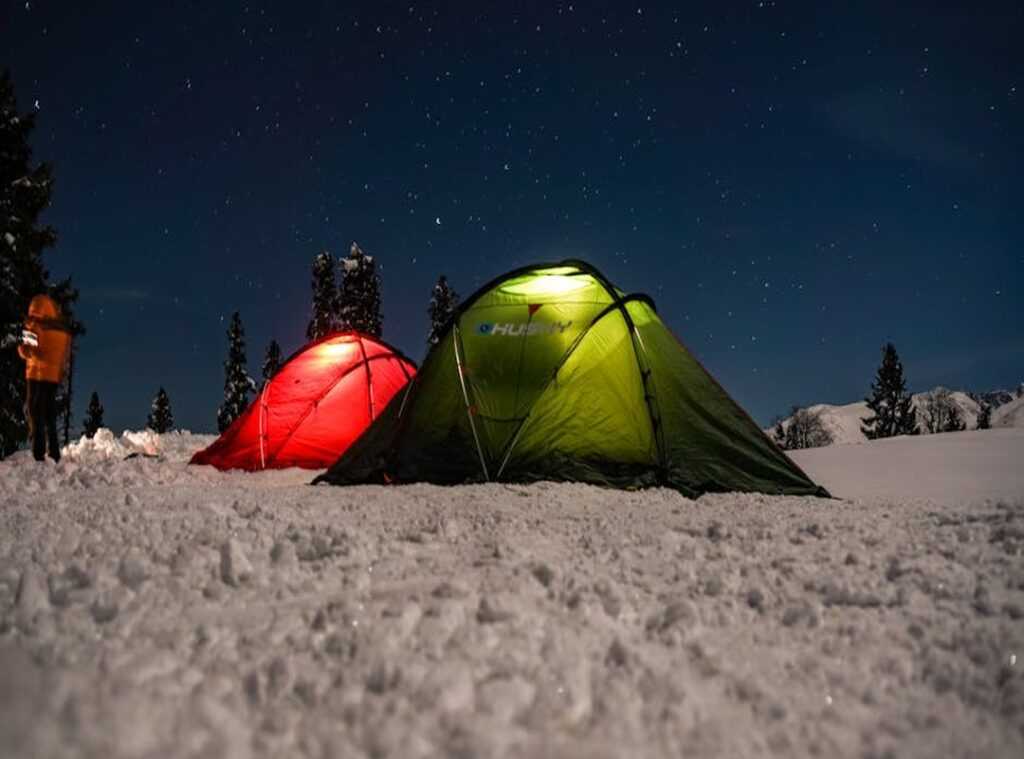
Ever stood in front of a wall of tents, feeling lost in a sea of fabric and poles? The wrong choice means a soggy, miserable night under the stars. I get it.
I’ve spent years testing tents in every condition possible. Calm summer evenings to surprise mountain storms. You’re probably wondering, “How do I avoid that nightmare?” Well, this guide comes in.
I’ll walk you through a simple, clear path to choosing right tent for your adventures. Trust me, this isn’t guesswork. It’s about ensuring you make the right choice the first time.
Ready to dive in?
Start Here: Crafting Your Tent Adventure
Before diving into tent models, let’s tackle the real questions. Choosing right tent starts with knowing who and what you’re sheltering. Here’s a common mistake: trusting those “2-person” labels.
Manufacturers seem to think we’re sardines. Want a cozy night? Size up by one.
A 2-person tent fits one person and their gear. Two people? Go for a 3-person tent.
It’s a game-changer, trust me.
Next, ask yourself: when and where are you camping? This is about seasonality. Most folks only need a 3-season tent, which covers spring through fall, focusing on ventilation and rain protection.
But if you’re a winter warrior? A 4-season tent is your fortress against snow and high winds. It’s heavier but built like a tank.
Think of it like choosing between a convertible and an SUV.
And finally, how are you getting there? Your mode of travel changes everything. Backpackers?
Every ounce matters. You don’t want to lug around a tent that feels like carrying a boulder. Packed weight and size are your new best friends.
Car campers, on the other hand, can live it up. Comfort and space take the spotlight here. Headroom is a luxury when weight isn’t an issue.
These questions are key for narrowing your tent options. Want more takeaways on outdoor essentials? Check out important gear beginners outdoor living.
It’s packed with practical advice.
Start with these questions, and you’ll avoid common pitfalls. Let’s make your next camping experience unforgettable.
Tent Talk: Shapes That Suit Your Adventure
When it comes to choosing the right tent, shape matters more than you’d think. Dome tents are the jack-of-all-trades in camping. They’re versatile, with a good balance of weight, weather resistance, and interior space.
Most backpackers and small-group car campers go for these. Why? Because they strike the perfect balance between comfort and practicality.
Now, if you’re all about comfort and space, cabin tents are your answer. Think of them as the “family rooms” of the campsite. With near-vertical walls, they maximize interior space and headroom.
Perfect for car campers who want to feel at home in the wild. But let’s be honest, they’re not the lightest of the bunch.
For those who prioritize stability and space-to-weight ratio, tunnel tents are a solid choice. They’re popular with backpackers and bike-packers. These tents stand firm in high winds (when pitched correctly), but remember, they often aren’t freestanding.
It’s a trade-off some are willing to make.
Then there’s the ultralight category. Tarps and bivys cater to the minimalist or advanced user. They trade comfort and bug protection for the absolute lowest weight.
If you’re going ultralight, you already know what you’re getting into. Bare bones but fast.
If you’re still scratching your head over choosing the right tent, don’t worry. There’s no one-size-fits-all answer. It all boils down to what you value most in your adventures.
Comfort? Weight? Space?
Each tent shape has its pros and cons. Choose wisely.
Beyond Basics: Comfort Features That Matter
When it comes to choosing the right tent, there are some features that feel more like secrets than standard. But trust me, they’re worth knowing.

Let’s talk doors and vestibules. Having two doors is a game-changer, especially if you’re camping with someone else. Nobody likes to clamber over their partner in the middle of the night.
And a vestibule? It’s the tent’s own mudroom (or garage), ideal for keeping muddy boots and wet packs out of your sleeping space. Imagine your tent without it (chaos.)
Ventilation is another must-have. Without it, you’ll wake up damp even if it didn’t rain. Those mesh panels and rainfly vents aren’t just for show.
They’re your best friends against condensation. Think of them as the air conditioning system for your tent. No one wants to sleep in a damp cave, right?
Now for the poles. Aluminum poles are like the superheroes of tent setups: strong and light. Fiberglass poles, though cheaper, are heavier and can splinter (not fun in the wild).
When it comes to setting up a tent, simple is key. Arriving at a campsite in the dark or during a thunderstorm isn’t the time for complex setups. Color-coded poles can save your night.
Who knew colors mattered so much in the wild?
And oh, the little things. Interior pockets and gear lofts. These tiny features pack a punch.
They keep your headlamps, phones, and random items organized and off the floor. It’s like having a tiny built-in shelf. You don’t want to trip over stuff in the middle of the night, do you?
So next time, when you’re knee-deep in backpacking essentials what you need know, remember these features. They make or break your camping comfort. Trust me, you don’t want to overlook them.
Tent Know-How: Materials & Weatherproofing Decoded
When you’re choosing the right tent, you might find yourself drowning in jargon. Let’s cut through that fog. Tent fabrics are usually made from nylon or polyester.
Nylon is lighter and stronger but sags when wet. Polyester, on the other hand (and this is key), doesn’t stretch and has better UV resistance. Which one do you need?
Depends on your adventure style.
Now, what’s this “Denier” thing? It’s a simple measure of fabric thickness. A higher denier (like 70D) means thicker, more durable fabric.
You want that for your tent floor. It takes more abuse from rocks and roots. A lower denier, like 20D, is lighter but less durable.
Perfect for a rainfly, where weight matters more than toughness.
Waterproof ratings are another headache. Hydrostatic Head (HH) ratings tell you how waterproof a tent is. For general camping, a 1500mm rating is solid.
It keeps you dry in most situations. But if you’re braving torrential rain, look for 3000mm or more. Remember, the highest number isn’t always necessary unless you’re facing a monsoon.
Seam taping is key. It’s where seams are sealed with waterproof tape to stop leaks. Always check for “factory-taped seams.” This is non-negotiable.
Without it, water sneaks in through those tiny stitch holes.
In short, know your materials and ratings. They’re not just numbers. They’re your ticket to a dry, comfortable night in the outdoors.
Why settle for less?
Ready for the Perfect Adventure
Feeling overwhelmed? It’s normal. But now, you have the tools to squash that anxiety.
The main challenge? The fear of ending up with a tent that doesn’t match your adventure. No more guessing games.
By answering key questions and grasping key features, you’re all set for choosing right tent. You’re equipped. You’re ready.
So, what’s next? Dive into the options. Discover the possibilities.
It’s time to plan your next adventure, knowing you’re backed by the right gear. Explore your perfect shelter now and set the stage for unforgettable experiences. Your adventure begins with a click.